Linex akiongea na walemavu mbalimbali katika kituo cha walemavu Kabanga,mwenye suti nyeusi aliyesimama nyuma ya Linex ni Mkurugenzi wa Hospitali ya Kabanga Father S. Nzabhayanga akisikliza kwa makini.
Linex akiongea na walemavu wa viungo bwana Cosmas aliyekaa kwenye baiskeli na Novias aliyesimama
Linex akiwa na walimu Paul na Jane katika picha ya pamoja
Tunashukuru sana kwa ujio wa msanii huyu wa Kigoma kutembelea Kituo chetu chini ya Hospitali ya rufaa Kabanga na kujua walemavu wanaishije na kuchukua changamoto mbalimbali za kituo ikiwa ni mara ya kwanza kwa kituo chetu kutembelewa na msanii mkubwa kama huyu.Tunamuombea na kumtakia utekelezaji mwema wa mambo yote aliyoahidi kifanyia kazi lakini kubwa zaidi Kujitoa kuwa balozi wa kituo hiki.
KARIBU TENA KABANGA LINEX
Na;Issa Kambi
Mkuu wa Kitengo cha walemavu Kabanga.
Kwa niaba ya watoto wenzangu na ndugu wengine tunasema KARIBUNI tena
(On behalf of my fellow children and others we are all together say that you are welcome again)
HAPO JUU NI WAUMINI WA KIKRISTO KUTOKA UMOJA WA MADHEHEBU KABANGA WAKICHEZA NA KUFURAHI NA WENGINE WAKISIKILIZA KWA MAKINI MANENO MATAMU YALIYOKUWA YAKIIMBWA NA WANA KWAYA WANAOONEKANA HAPO JUU PICHANI WAKIIMBA KWA HISIA KABISA.
The Kabanga teachers college principal Mr.Jeremiah at the last chair and others listening careful to the choir singers
The Rev.chairperson and secretary of the Kabanga church union
The People living in Kabanga center following prayers from the Rev.Chairperson of the Kabanga church Union Today.
The two pictures above are also the choir singers dancing with nice song.
They came with a lot of gifts including clothes,soaps,fruits and food but we are happy that they promised to pay for Mr.Lutha Onesmo's school fees which were asked by Mr.Issa Kambi The head of the kabanga center/unit.
During prayers Rev.Chairperson spoke nicely about the killing/mutilating of people with albinism and asked the society to stop it because it is not true that you can get money/wealth from albino's body parts.
Unforgettable words today from Rev. was "PEACE AND LOVE IS EVERYTHING IN OUR LIFE" (By.Mr Kambi.The bloger) KARIBUNI TENA.
Msamalia mwema huyo akigawa nguo mwenyewe kwa alemavu wa Ngozi(ALBINO) na wengine kama inavyoonekana katika picha hii na hiyo hapo chini.
AHSANTE SANA NA MUNGU AKUBARIKI
Paroko,mwenyekiti wa kigango cha Murubona na Kumsenga pamoja na waumini wengine wa Kanisa Katoriki Kasulu mjini,ahsantemi sana kwa kutembelea shule/kituo chetu cha Kabanga na kutoa msaada wenu wa hali na mali na kubwa zaidi mchango wa Tsh.1,700,000/=(Cash.Tsh.1,590,000/= pamoja na ahadi ambazo hutimiza jumla ya kiasi tajwa hapo juu) kwa ajili ya mwanafunzi wetu Gilbert.
Mbarikiwe sana ndugu zetu.
"MOYO USIO NA SHUKRANI HUKAUSHA MEMA YOTE"
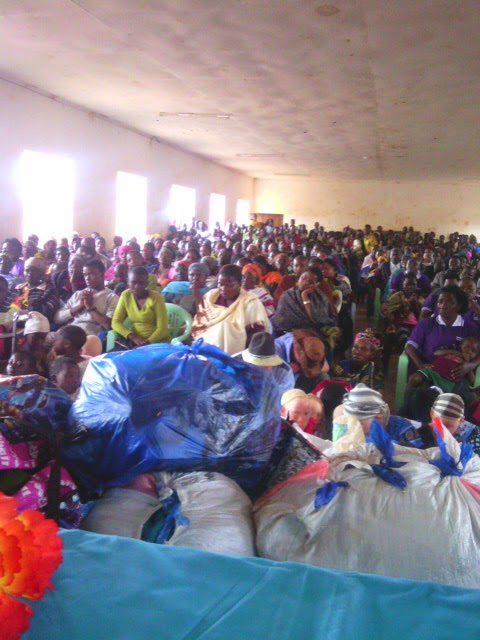
Baadhi ya wanafunzi na wakazi wengine waishio katika kituo cha walemavu Kabanga wakifurahia zawadi walizoletewa na waumini wa Kanisa Katoriki-Kasulu.(4.4.2015)
Umati wa waumini wa Kanisa Katoriki Jimbo la Kasulu mjini walioambatana na Paroko lakini pia viongozi mbalimbali wa kanisa hilo kuja kuwajulia hali na kuwafariji walemavu wa ngozi(ALBINO) na kuwaletea zawadi kemkem siku moja kabla ya Pasaka (kwa kweli wamevunja rekodi haijawahi kutokea) kutembelewa na umati mkubwa kama huu. TUMEFARIJIKA SANA
Wanaoonekana hapo mbele ni baadhi ya wanakwaya waliotumbuiza na kupamba matembezi haya.Sintosahau wimbo mzuri wa Kiha ulioinua watu ukumbini na kucheza kwa furaha chini ya kwaya masta "Kihekidye"
Media caption"We're being killed like animals" - An albino woman in Tanzania where over 70 albino people have been murdered in the last 3 years
People with albinism face prejudice and death in Tanzania. A new campaign is now being launched to end hostility towards the tiny community of about 30,000. BBC Africa's Salim Kikeke met some of them.
Mtobi Namigambo, a fisherman by trade, sits calmly on a stool outside his mud house in Ukerewe island.
Once a sanctuary for albinos, this is no longer the case. His four-year-old son, May Mosi, who has albinism, sits on his lap. Showing off his newly learnt skills, May counts from one to 10, confidently.
Mr Namigambo occasionally throws a glance at his wife, Sabina, who is seated on a mat at his feet preparing the family's evening meal. Their other two children are playing nearby. They also have a newborn baby, sleeping inside the house.
When May was three months old, he escaped an attempted kidnap.
"I had gone to the lake to fish. They were all alone in the house when the attackers struck," Mr Namigambo tells me.
"My wife jumped out of the window and ran to safety with May, leaving the two children behind, who were not harmed at all."
'Hacked to death'
"The attackers were after May," Mrs Namigambo chips in, "My husband was away on a fishing trip and they knew about it. That's why they came for my boys.
"After jumping out of the window, they still came after me and I was screaming for help. They only backed off when I woke up the neighbours."
People with albinism risk being killed for their body partsActivist Alfred Kapole hopes that the next generation will have a safer future
Albino people, who lack pigment in their skin and appear pale, are killed because potions made from their body parts are believed to bring good luck and wealth.
More than 70 albinos have been killed over the last three years in Tanzania, while there have been only 10 convictions for murder, campaigners say.
In the most recent case, in May, a woman was hacked to death.
"We're being killed like animals. Please pray for us," one albino woman sings, at an event called to promote the rights of albinos.
'Targeted for hair'
May is among 70 people with albinism who live in the remote island of Ukerewe, which is three hours away from Mwanza, the second largest city in Tanzania.
"We would urge the government to do more in educating the community here," Mr Namigambo tells me.
"The government once held seminars about albinism. It made a lot of difference, but not any more," he adds.
Mashaka Benedict stands by a statue which promotes the rights of albino people in Sengerema townAlbino people who have been killed, some of them from neighbouring states, are remembered
Campaign group Under the Same Sun, which works closely with the local albino community, says the island is not as safe as people would like to believe.
The chairman of the regional Tanzania Albinism Society, Alfred Kapole, an Ukerewe native, was forced to flee to Mwanza city.
"He was among the first person with albinism whose case reached the courts after a village leader attempted to kill him for his hair," says Vicky Ntetema, head of Under the Same Sun.
"Last year his home was attacked. Luckily he was in Mwanza. There was another attempt on his life this year."
Ms Ntetema says this is a common experience for albino people.
"A family of a young girl with albinism had to flee their home twice, in 2011 and 2012, when unidentified men attacked them, saying that they were sent by the father of the home, a fisherman, to get the girls' hair.
"When people commit crimes they go by canoes to neighbouring islands where they cannot be found," she adds.
'Bodies stolen'
The Tanzania government has launched a campaign to raise funds to help persuade communities to abandon old beliefs and stop targeting albino people.
However, the campaign focuses on urban areas, not in rural areas where albinos face the biggest threat.
"We don't have the capability, or means to reach communities at village level. We mainly rely on radio or television, but we can't reach the grassroots because of costs," says Ramadhani Khalfan, chairman of the Ukerewe Albino Society.
About 70 peole with albinism live in the remote island of Ukerewe,Albino people face the biggest threat in rural areas
In Sengerema, some 60 km (34 miles) from Mwanza, a monument has been erected at a roundabout in the middle of the town.
It is a life-size metal statue, depicting a pigmented father holding his child with albinism on his shoulders while a pigmented mother puts a wide-brimmed hat on the child's head to protect him from the sun.
There are also 139 names of victims who were killed, attacked, or whose bodies were stolen from graves.
A representative of the Sengerema Albino Society, Mashaka Benedict, told the BBC that even educated people still believe that albino body parts can bring wealth.
"If that's the case, why are we not rich?" he asks.
Mr Benedict alleges that prominent people are involved in the "killing business" and this is why very few people have been arrested, charged, convicted or jailed.
"How can a poor man offer $10,000 [£6,300] for a body part? It's the businessmen and politicians who are involved."
The police say they try their best to investigate attacks.
"These cases are complicated because most incidents happen in very remote areas where there is no electricity, for example, and that makes identifying perpetrators at night very hard," says Mwanza police commander Valentino Mlowola.
"We investigate each and every case and claim, but as you can see, it's not simple."
Despite the failure to solve cases, many people living with albinism are hopeful that public attitudes will change and children like May will be able to have a life, free of persecution and violence.
Source;BBC
The United Nations human rights office reports political action is growing in Tanzania, Malawi, and Burundi to clamp down on the horrific trade in albino body parts. While welcoming these moves, the agency says much work and commitment will be needed to stop the trade and protect the people being maimed and killed.
The Office of the High Commissioner for Human Rights says all three countries — Tanzania, Malawi, and Burundi — have some kind of action plan underway or under consideration. It applauds, in particular, a newly unveiled five-point plan in Malawi, which it says is striking for its detail and adoption of new laws needed to protect people with albinism.
U.N. Human Rights spokesman Rupert Colville says political commitment to abolish the sale of albinos' body parts seems to be increasing in all three countries but cautions that there is still a long road ahead.
“Whether that really is going to make a significant difference in the number of cases and in changing the mentality that is driving this awful trade — you know, we are not there yet… At the end of the day, it is only when people stop having their limbs chopped off and stop being murdered that we can talk about positive results,” says Colville.
The U.N. human rights office has received reports of more than 200 cases of attacks against people with albinism, mostly children. They include killings and mutilations from 15 countries between 2000 and 2013. It is believed the number of victims is greatly underestimated as many attacks and killings go undocumented.
Myth of magical powers
The horrific trade is driven by the false belief that body parts from albinos possess magical powers capable of bringing riches. It also thrives because of the vast amounts of money to be made.
For example, Colville notes a man in Malawi was paid $6,500 for attempting to kidnap his 11-year old niece. He says the man, who recently received a two-year prison sentence, was one of at least three people involved in this operation.
“You will see obviously a chain of people involved in this awful hideous commerce. So, who is paying these large sums of money is not very clear. But, at least in Tanzania, it does seem to get worse during election periods. So, that would imply… that politicians are involved to some extent,” says Colville.
Tanzania is the country where most killings of albinos have taken place in recent years. General elections are set for the end of October, and this seems to have ushered in a new wave of attacks.
President Jakaya Kikwete has promised to put an end to this and not to allow the attacks to escalate as they have done in previous years.
In June 2013, the U.N. Human Rights Council passed a resolution aimed at preventing and combating discrimination and violence against people with albinism.
In another move to keep this issue on the international stage, the Council on Thursday approved the appointment of an "independent expert" whose job will be to promote the rights of albinos and make sure they are treated as equal members of their societies.
Colville says this important new mandate will help give a voice to these people and contribute to their protection.